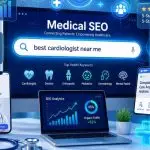
Heading into 2027, new patients rarely come from one channel. rater8’s 2026 survey of 992 U.S. patients found family and friends (43%), insurance directories (43%), review sites (40%) and AI tools like ChatGPT (36%) now outrank Google search (34%) and physician referrals (32%). Patients hear about a practice, then verify it online before calling.
By the WevTEC Review Team · Website repair, technical SEO and AI search optimization since 2013 · Last updated November 2026
Key Takeaways
- No single channel wins. The top seven patient influences all fall between 30% and 43%. Patients combine several before they book.
- AI tools now beat Google search and doctor referrals as an influence: 36% vs. 34% and 32%. A year earlier, the comparable figure was 17%.
- Inside Google, AI Overviews are the most trusted section for doctor searches (37%), ahead of organic links (20%), the map pack (13%) and ads (7%).
- Healthcare is the most AI-saturated search category. BrightEdge tracked AI Overviews on about 88% of healthcare queries by December 2025.
- Reviews are a gate. 75% of healthcare searchers won’t consider a provider below 4.0 stars, and 55% have walked away from a doctor because of reviews.
- There’s no AI shortcut. Google says AI Overviews draw from its normal search index. Strong SEO, accurate listings, real reviews and a fast site are what get you cited.
- Paid ads still matter, side by side. Google Ads, Microsoft (Bing) Ads and Facebook/Instagram Ads bring patient calls immediately while SEO, Maps and AI visibility build. Benchmark cost per lead for physicians is about $40 on Google and $32 on Facebook.
The Data: What Influenced Patients When Choosing a New Doctor
The rater8 2026 Patient Choice Report surveyed 992 U.S. adults through SurveyMonkey in April 2026. Respondents had searched for a new doctor in the past 12 months and could pick more than one source, so totals exceed 100%.
Source: rater8 2026 Patient Choice Report (n=992, April 2026). Patients could select more than one source.
| Rank | Influence channel | % of patients | What the practice actually controls | Blueprint pillar |
|---|---|---|---|---|
| 1 | Family & friends | 43% | The patient experience, plus what friends find when they look you up | Reviews + Website |
| 1 | Insurance websites & directories | 43% | Accurate provider, location and network data at every payer | Listings & NAP |
| 3 | Online review websites | 40% | Review volume, recency, rating and response quality | Review engine |
| 4 | AI tools (ChatGPT, Claude, Gemini, Google AI) | 36% | Answer-ready content and consistent facts across the web | AI-readable website |
| 5 | Google search results | 34% | Organic rankings, Google Maps, Search Ads | SEO + GBP + Speed |
| 6 | Doctor recommendations | 32% | Physician profiles and referral-friendly specialty pages | AI-readable website |
| 7 | Social media | 30% | Active profiles that support, not replace, search | Reviews + Social |
What the ranking hides: the 43% from friends and family is not “offline” anymore. A recommendation starts the journey, then the patient checks you on Google, ChatGPT, reviews and their insurer’s directory. If those sources contradict the recommendation, the patient often books elsewhere.
Inside Google: Which Part of the Results Patients Trust Most
The same survey asked patients researching a doctor on Google which part of the results page they trust most.
Source: rater8 2026 Patient Choice Report.
| Google section | Patient trust | How a practice earns a place there |
|---|---|---|
| AI Overview | 37% | Indexed, high-quality pages with clear answers; consistent facts across the web; strong reviews |
| Organic results | 20% | Technical SEO, in-depth service, condition and physician pages, internal linking |
| Local map pack | 13% | Complete Google Business Profile, proximity, review signals, NAP consistency |
| Sponsored results | 7% | Google Ads with tight targeting, negative keywords and conversion tracking |
What this means for ad budgets: Search Ads still buy placement at the top for high-intent searches like “urgent care open now.” But patients trust ads least. Ads perform best when they sit on top of strong SEO, Maps, AI visibility and reviews, not as a replacement for them.
Why AI Search Hits Healthcare Harder Than Any Other Industry
Healthcare is where AI Overviews show up most:
| Measure | Figure | Source |
|---|---|---|
| Healthcare queries showing an AI Overview | ~88% of tracked queries (December 2025) | BrightEdge |
| All tracked queries showing an AI Overview | ~48% (February 2026, up from ~31% a year earlier) | BrightEdge |
| Patients who have used an AI tool to research a provider | 47% (up from 31% about nine months earlier) | rater8 2026 via MediaPost |
| AI influence among patients who actually switched providers | 39% | rater8 2026 |
| Doctors who called AI search visibility a top or moderate 2026 priority | 28% | Tebra |
The gap is the opportunity. Nearly half of patients now use AI tools to research doctors, while only about a quarter of practices say AI visibility is a real priority. Independent clinics that move first can compete with hospital systems that move slowly.
A note on conflicting surveys
Not every study shows the same order. A Tebra patient survey found Google (48%) far ahead of social media (10%) and ChatGPT (7%) as a way to find a provider. Different surveys ask different questions: “Where did you find a doctor?” measures discovery, while rater8’s “what influenced your decision?” measures verification. Both point to the same conclusion. Patients discover practices through several channels and verify them online before they book.
The Patient Journey in 2027: Hear, Verify, Book
Every step in the journey has a technical point of failure.
| Step | What the patient does | Where practices lose them |
|---|---|---|
| 1. Hear | Gets a name from a friend, insurer directory, referring doctor or social post | Wrong phone number, outdated address, physician missing from the payer directory |
| 2. Verify | Asks ChatGPT or Google, reads the AI Overview, checks stars and recent reviews | Thin website, conflicting facts across listings, 3.9-star rating, unanswered complaints |
| 3. Book | Taps “Call” or “Book” on a phone | Slow mobile pages, broken layouts, failed form submissions, no click-to-call |
A practice that is strong in one step leaks patients at the other two, so all three steps need to work together.
Where Paid Ads Fit: Google Ads, Microsoft (Bing) Ads and Facebook Ads
Paid ads don’t replace SEO, Google Maps, AI visibility or reviews, and those channels don’t replace ads. Ads put a practice in front of patients who are ready to book today, while organic and AI visibility take three to six months to build. The practices that grow fastest run both side by side.
Ads already sit inside the survey’s channels. Google search results (34% influence) include Google Search Ads, and social media (30%) includes Facebook and Instagram ads. Sponsored results are also the least trusted part of Google (7%). That’s exactly why ads convert best when the patient clicks through to a practice that also has strong reviews, a clear website and an accurate profile. Ads buy the first look; your reviews, website and listings win the booking.
What each ad platform contributes
| Platform | Where it reaches patients | Best use for a practice | 2026 benchmark |
|---|---|---|---|
| Google Ads | Google Search, Google Maps and partner sites, at the moment someone searches “urgent care near me” or “dentist open Saturday” | Capture high-intent searches immediately, protect your practice name from competitors bidding on it, and cover new locations or services while SEO builds | Physicians & surgeons: 6.61% click-through rate, 12.43% conversion rate, $40.04 per lead. Dentists: $72.97 per lead |
| Microsoft Advertising (Bing Ads) | Bing, Microsoft Edge, Yahoo, AOL and other Microsoft search placements | Reach desktop searchers who don’t use Google, often office workers and older patients. Campaigns can be imported from Google Ads, so setup is quick | Bing holds 18.8% of U.S. desktop search (StatCounter, October 2026) |
| Facebook & Instagram Ads (Meta) | Feeds, Stories and Reels, before the patient is actively searching | Build local awareness, promote elective and cosmetic services, reach people who visited your website, and support word of mouth | Physicians & surgeons lead campaigns: 4.18% click-through rate, 6.41% conversion rate, $32.14 per lead. Dentists: $61.56 per lead |
Benchmark cost per lead, U.S. median. Sources: WordStream/LocaliQ 2026 Google Ads Benchmarks (campaigns April 2025–March 2026) and LocaliQ Facebook Advertising Benchmarks 2026. A lead is a call or form, not a booked patient; your costs depend on specialty, city and competition.
How ads and organic work together
| Situation | SEO, Maps & AI visibility | Paid ads |
|---|---|---|
| New practice or new location | Takes months to rank and get reviewed | Brings calls from the first week |
| Competitive specialty or large metro | Builds long-term authority | Holds top-of-page visibility on high-value searches |
| Seasonal or new service (flu shots, Invisalign, weight loss) | Content added to the website | Turns on instantly and off when the season ends |
| Patient sees your ad, then checks reviews and AI | Reviews, profile and website win the trust | The ad earned the first look |
| Lowering cost per patient over time | Organic visits have no per-click cost | Budget shifts to the searches organic doesn’t win yet |
Healthcare ad rules to follow
- No health-condition targeting. Google’s personalized ads policy restricts targeting people based on health conditions, and Meta removed health-related detailed targeting options in 2022. Target by location, search terms and interests instead.
- Keep tracking HIPAA-safe. Don’t let ad pixels send patient health information to Google or Meta. Record the call or form submission, not the reason for the visit, and confirm your setup with your compliance officer.
- Send clicks to the right page. An ad for “colonoscopy in Katy” should land on the colonoscopy page with click-to-call, not the homepage.
- Measure cost per new patient, not cost per click. Track every call and form by source so you can compare ads, Maps and organic side by side.
- Keep ad spend and management separate. Ad budget is paid directly to Google, Microsoft or Meta; management is the work of building, monitoring and improving the campaigns.
Go deeper: PPC Advertising Services · Healthcare Marketing Plans with Ads Management
Step-by-Step Guides for Each Channel
- How to Optimize Your Medical Practice Website for Google AI Overviews
- What Is an llms.txt File and Does Your Healthcare Website Need One?
- The Ultimate Google Business Profile Checklist for Medical Clinics
- How to Build a Steady Patient Review Engine Without Violating HIPAA
- How Slow Website Speed and Broken Mobile Layouts Are Costing Your Clinic Patients
Frequently Asked Questions (FAQ) & Direct Answers
How has patient acquisition changed in 2027 compared to traditional medical marketing?
Traditional medical marketing relied on physician referrals, print and word of mouth. Heading into 2027, patients verify every recommendation online first: 36% cite AI tools, 40% review sites and 43% insurance directories as influences, and 75% won’t consider a provider rated below 4.0 stars.
- Then: one trusted source, a referral or a friend, usually decided the booking.
- Now: patients combine several sources; the top seven influences all sit between 30% and 43%.
- Then: the website was a digital brochure.
- Now: your website, listings and reviews are the evidence AI tools summarize before a patient ever calls.
- What to do: treat online visibility as patient-acquisition infrastructure and audit it like any clinical system.
Why are AI tools like ChatGPT and Google AI Overviews now driving 36% of new patient choices?
AI tools don’t make 36% of choices; 36% of recent doctor-searchers named AI tools as a top influence, up from a comparable 17% a year earlier. Patients use ChatGPT and AI Overviews because they summarize reviews, credentials, insurance and location into one answer, saving time.
- Convenience: one conversational question replaces opening ten tabs.
- Trust: AI Overviews are the most trusted section of Google for doctor searches (37%).
- Exposure: about 88% of tracked healthcare queries now show an AI Overview.
- Switchers lean on AI more: influence reaches 39% among patients who changed providers.
- What AI needs from you: clear answers, consistent facts across listings, verified physician details and recent reviews.
How can an independent clinic fix its digital infrastructure to capture these modern patient channels?
Start with an audit, then fix four layers in order: website speed and mobile layout, structured content and schema for AI, consistent Google Business Profile and directory listings, and a steady HIPAA-compliant review workflow. Technical fixes take weeks; visibility gains build over three to six months.
- Audit: Core Web Vitals, indexing, crawler access, schema, Google Business Profile, top directories and review profile.
- Repair the website: speed, mobile layout, broken forms and click-to-call.
- Make it AI-readable: answer-first service, condition and physician pages with healthcare schema.
- Align listings: one source of truth for name, address, phone, hours, providers and insurance.
- Automate reviews: a BAA-covered, post-visit request sent to every patient.
- Measure: track calls, forms and bookings by source every month.
Do medical practices still need Google Ads, Bing Ads and Facebook Ads if they invest in SEO and AI search?
Yes, for most practices. Ads bring patient calls immediately while SEO, Maps and AI visibility build over months, and they hold top-of-page spots on high-value searches. Patients trust ads least on their own, so ads convert best when reviews, website and listings are already strong.
- Google Ads: captures patients searching right now; physicians average about $40 per lead.
- Microsoft (Bing) Ads: reaches the 18.8% of U.S. desktop searches that happen on Bing, often at lower competition.
- Facebook & Instagram Ads: builds awareness before patients search; physicians average about $32 per lead.
- Together: ads fill the gap while organic grows, then budget shifts to the searches organic doesn’t win yet.
Is Your Practice Invisible at the Verification Step?
Patients are already hearing about you. The question is what they find when they check: a fast, clear website with matching listings and recent reviews, or an outdated site that makes ChatGPT and Google hesitate.
WevTEC (Fix Website Issues) has repaired more than 1,000 websites since 2013 and works with medical practices, dental offices, specialists and ERs nationwide. We find what’s blocking your patient flow and fix it, and you pay only after the work is done.
Your Free Website & AI Search Audit includes:
- Google Search and Google Maps visibility check
- AI search review: how ChatGPT, Gemini and Google AI Overviews describe your practice
- Core Web Vitals, mobile layout and conversion-path review
- Google Business Profile and directory consistency check
- Google Ads, Microsoft Ads and Facebook Ads review: what to run, pause or fix
- A written list of what to fix first, which you keep either way
👉 Book your Free Website & AI Search Audit
📞 Call (832) 266-7209: 24/7 support, Houston-based, serving practices nationwide.
Want to see pricing first? Compare our healthcare marketing plans, starting at $750/month, month-to-month.
Sources
- rater8 2026 Patient Choice Report: source-influence data, star-rating thresholds, AI influence among switchers
- rater8: 2026 Patient Choice Report announcement: Google section trust data; 55% walked away due to reviews; 17% prior-year AI figure
- MediaPost: patients’ use of AI to find doctors: 47% AI research usage
- eMarketer methodology note: 992 U.S. adults, April 2026, SurveyMonkey
- ALM Corp summary of BrightEdge AI Overview tracking: 88% healthcare AI Overview presence; 48% overall
- Tebra: How patients choose and drop doctors: discovery channels; 28% of doctors prioritizing AI search
- Google Search Central: changes to FAQ rich results and Search Engine Journal: Google drops FAQ rich results
- Search Engine Land: Google on AI Overviews and llms.txt
- Think with Google: page load time and bounce probability
- WordStream/LocaliQ: 2026 Google Ads Benchmarks: physician and dentist click-through, conversion and cost-per-lead medians
- LocaliQ: Facebook Advertising Benchmarks 2026: physician and dentist lead-campaign benchmarks
- StatCounter: U.S. desktop search engine market share: Bing 18.8% (October 2026)
Survey figures describe national patient behavior. They are not guaranteed results for any individual practice.